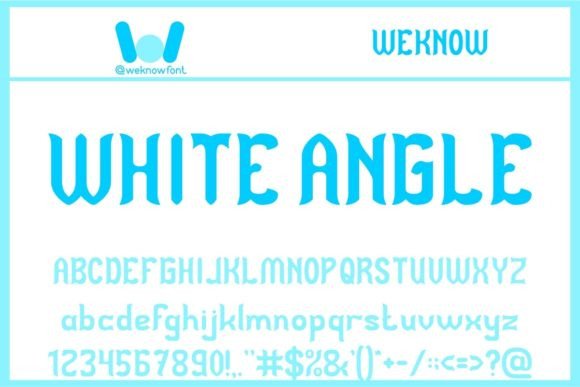
White Angle: A Modern Gothic Display Font for Bold Projects
There's a moment in every creative project where the font choice either clicks into place or throws everything off balance. You've got the concept, the colors, the imagery—but the typography needs to carry a specific weight. Maybe you're building a brand that wants to feel sharp and contemporary without being cold. Maybe you're designing a poster that needs to stop someone mid-scroll. That's where a typeface like White Angle enters the conversation.
White Angle is a modern gothic display font, and it occupies an interesting space in the typography landscape. It borrows the structural clarity of gothic letterforms—think strong verticals, deliberate angles, and a sense of geometric precision—but strips away the ornamental heaviness that can make traditional gothic fonts feel dated or inaccessible. The result is a typeface that reads as current, clean, and commanding without sacrificing personality.
What Makes White Angle Visually Distinctive
The first thing you notice about White Angle is its confidence. The letterforms have a tall, condensed proportion that naturally draws the eye upward, which gives text a sense of energy and forward motion. The angles aren't accidental—they create subtle tension in the shapes, adding visual interest without becoming distracting. This is a font that understands the difference between "bold" and "noisy."
Unlike some display fonts that rely on excessive detail or decorative flourishes, White Angle keeps its design language restrained. That restraint is actually its strength. It works in contexts where you need the typography to make a statement without competing with every other element on the page. The characters have enough individuality to be memorable, but enough consistency to function as a cohesive system across multiple applications.
For designers who've struggled with gothic or blackletter-inspired fonts feeling too medieval or too aggressive, White Angle offers a middle path. It's gothic in DNA but modern in execution—think of it as the typeface equivalent of a contemporary architectural space that uses dark materials and sharp lines but still feels inviting.
Where This Font Actually Works in Practice
Talking about a font's aesthetic qualities is one thing. Understanding where it actually performs well in real projects is what matters. Here's where White Angle tends to hold up:
Logo and Brand Identity Work — If you're developing a brand that targets an audience aged roughly 20 to 40 and wants to project strength, modernity, or a slightly edgy sophistication, this typeface is worth serious consideration. It works particularly well for brands in streetwear, fitness, music production, creative agencies, tech startups with a bold personality, and any business that wants to avoid looking generic. A logo set in White Angle communicates intentionality—it says the brand has made deliberate choices.
Editorial and Magazine Design — Display fonts live and die by how they perform at large sizes, and White Angle handles headlines with authority. For magazine covers, feature story headers, or chapter openers in books and comics, the condensed letterforms create strong visual hierarchy without requiring excessive point sizes. This matters when you're working with limited space or need a headline to coexist with strong imagery.
Poster and Music Industry Applications — Concert posters, album artwork, festival branding, and music-related social content are natural homes for a modern gothic display font. The visual language of music marketing—particularly in genres like electronic, hip-hop, metal, and alternative—often calls for typography that feels intense and distinctive. White Angle fits that brief without falling into cliché.
Digital and Social Media Content — YouTube thumbnails, Instagram story headers, website hero sections, and digital product covers all benefit from typefaces that read clearly at both medium and large sizes while maintaining visual impact. The clean geometry of White Angle means it renders well on screens, which isn't always the case with fonts that have more complex or traditional gothic structures.
Packaging and Merchandise — Product packaging for brands in the apparel, beverage, or lifestyle space often needs a typeface that looks premium without feeling corporate. White Angle's modern gothic character can add a layer of perceived quality and intentionality to packaging design, hang tags, labels, and merchandise like t-shirts or tote bags.
Matching Typography to Your Project's Actual Goals
Here's something that gets overlooked in font discussions: the best typeface choice isn't always the one that looks most impressive in isolation. It's the one that serves the communication goals of your specific project. Before committing to White Angle or any display font, ask yourself a few practical questions.
What's the primary reading context? If your audience will encounter the text on a phone screen at arm's length, a condensed display font might need more generous sizing than you'd use in a printed poster viewed from three feet away. Test the font at the actual size and medium where it will appear, not just in your design software at full zoom.
What's the emotional register of your project? White Angle carries a particular mood—modern, structured, slightly dramatic. That mood aligns beautifully with certain brand personalities and project types. But if you're designing materials for a children's educational platform or a warm, handcrafted artisan brand, the font's character might work against you. Good typography choices are honest ones.
How much text are you setting? Display fonts like White Angle are engineered for short-form text—headlines, logos, titles, single-word callouts. They're not designed for body copy or long paragraphs. This isn't a limitation; it's how display fonts are supposed to work. Pair it with a complementary serif font or sans serif font for running text, and let White Angle do what it does best in the spotlight moments.
Getting Font Pairings Right
Speaking of pairings, this is where many projects either come together beautifully or fall apart. White Angle's strong personality means it benefits from a body text font that provides contrast without conflict. A clean, neutral sans serif font with open letterforms and moderate weight works well—it provides breathing room and readability while letting the display font command attention in headlines.
A classic serif font can also work if your project leans more editorial or traditional, though you'll want to make sure the serif doesn't feel too formal against White Angle's contemporary edge. The key principle is contrast in function: one font for display, one for body. They should feel like they're on the same team but playing different positions.
When you're testing pairings, set actual content—not just the alphabet. Write a realistic headline, a subheading, and a paragraph of body text. Look at the composition as a whole. Does the eye move naturally from the headline to the supporting text? Does the hierarchy feel clear? If the display font is so dominant that everything else disappears, or if the body font feels disconnected, adjust your approach.
Practical Considerations Before You Commit
Before finalizing any font choice for a commercial project, review the licensing terms. White Angle, like most premium fonts, comes with specific usage rights that depend on how and where you'll use it. Desktop licensing covers printed materials and static designs. Web licensing covers use on websites. Some projects—especially those involving app interfaces, digital products for resale, or large-scale commercial merchandise—may require extended licensing.
This isn't bureaucratic overhead. It's standard practice in the design industry, and understanding licensing protects both you and the font creator. Most quality font foundries make licensing information straightforward, and it's always worth reviewing before a project goes to production rather than after.
Also take time to explore the full character set and any alternate styles included with the font. Many modern display fonts include stylistic alternates, ligatures, or weight variations that can expand your design options significantly. Spending ten minutes exploring what's available in the font file can save you hours of workaround later.
Why the Right Display Font Changes Everything
A project's typography is often the invisible framework that holds the entire visual experience together. When it's working, nobody notices—it just feels right. When it's wrong, everything feels slightly off, even if the audience can't articulate why. Choosing a typeface like White Angle for your headlines, logos, or display text is a decision that shapes how your audience perceives your brand or project before they read a single word of your message.
The fonts you choose communicate values, set expectations, and create emotional associations. A modern gothic display font tells a specific story—one of contemporary strength, deliberate design, and visual confidence. If that's the story your project needs to tell, White Angle is a typeface worth exploring. Test it in context, pair it thoughtfully, and let it do the heavy lifting where it matters most.