Over Creative: A Bold Typeface for Modern Branding
There's a moment in every design project where the typography either clicks into place or throws the entire composition off balance. You've got the imagery sorted, the color palette locked in, but something still feels unfinished. That's usually where a typeface like Over Creative enters the conversation—not as a subtle background player, but as a statement piece that anchors the visual identity of your work.
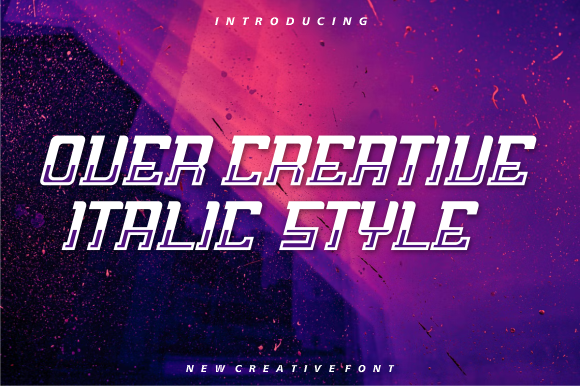
Over Creative is a bold, authentic display font built for projects that need to make an impression without trying too hard. It carries a modern sensibility with enough personality to stand on its own, yet remains versatile enough to adapt across different contexts. Whether you're designing a logo for a startup, laying out packaging for a new product line, or building social media templates for a brand refresh, this typeface brings a certain confidence to the table that's hard to manufacture with more neutral options.
What Makes This Typeface Stand Out
Display fonts live or die by their ability to command attention at larger sizes while still feeling cohesive within a broader design system. Over Creative manages this balance well. Its letterforms have a boldness that reads clearly on screen and in print, with enough stylistic flair to feel contemporary without drifting into trendiness. The strokes are confident, the proportions feel deliberate, and there's a sense of intention behind every curve and angle.
What separates a good display font from a forgettable one often comes down to character—and Over Creative has plenty. It doesn't rely on excessive ornamentation or gimmicky details. Instead, it earns its distinctiveness through thoughtful construction. The weight distribution across different letters feels consistent, which matters more than most people realize. When a font has uneven visual weight, it creates a subtle tension that makes layouts feel unstable, even if you can't immediately pinpoint why.
For anyone working in branding or visual communication, that internal consistency translates directly into trust. A typeface that looks polished signals professionalism, and professionalism signals reliability to your audience.
Where This Font Actually Works in Practice
Talking about a font in abstract terms is one thing. Seeing where it fits into real workflows is another. Here's where Over Creative tends to perform well:
- Logo design — The boldness of the typeface makes it a strong candidate for wordmarks and logotypes, especially for brands in lifestyle, fitness, gaming, entertainment, or creative services. It holds its own without needing additional graphic elements to prop it up.
- Packaging design — On shelf or on screen, packaging needs to communicate quickly. Over Creative's readability at larger sizes makes it suitable for product names, taglines, and front-panel typography where immediate recognition matters.
- Social media graphics — Platforms like Instagram, TikTok, and Pinterest reward bold, eye-catching visuals. A typeface with this kind of presence works well for quote graphics, promotional posts, story templates, and thumbnail text that needs to pop in a crowded feed.
- Merchandise and apparel — T-shirt printing, hats, tote bags—any surface where text needs to be both decorative and legible benefits from a font that doesn't shrink into the background. Over Creative fits naturally into this space.
- Poster and editorial layouts — Magazine covers, event posters, book covers, and zine layouts all require type that can carry visual weight alongside photography or illustration. This typeface handles that role without competing too aggressively with other design elements.
- Website headers and hero sections — While body text needs a font optimized for long-form reading, headers and hero banners benefit from something with more character. Using Over Creative for key headlines while pairing it with a clean sans serif for body copy creates a natural visual hierarchy.
- Invitations and event materials — For launches, parties, conferences, or any event where the design sets the tone, a bold display font adds energy and personality that more conservative choices simply can't match.
Building Visual Consistency Across Touchpoints
One of the most overlooked aspects of brand identity is typographic consistency. Businesses often invest in a logo and a color scheme but leave typography as an afterthought, defaulting to whatever font ships with their design software or catches their eye on any given day. The result is a visual identity that feels fragmented—professional in one place, amateurish in another.
Choosing a typeface like Over Creative as part of your core brand toolkit solves a specific problem: it gives you a reliable, recognizable voice across different applications. When your Instagram graphics use the same typeface as your packaging, your website headers, and your printed materials, you're reinforcing a pattern that your audience starts to associate with your brand. That's brand recognition in its simplest, most practical form.
It also saves time. Instead of hunting for a new font every time you start a project, you already have a go-to option that works across multiple contexts. Designers working with small teams or solo entrepreneurs managing their own branding know how valuable that kind of efficiency is.
Pairing Over Creative with Other Typefaces
No font exists in isolation, especially in professional design work. The real magic happens in how typefaces interact with each other. Over Creative's bold, expressive nature means it pairs best with something more restrained for body text or secondary information.
A clean sans serif font—think along the lines of a geometric or neo-grotesque style—creates a natural contrast that lets each typeface do what it does best. The display font handles headlines and focal points, while the sans serif manages longer passages of text where readability over multiple lines is the priority.
Some designers also experiment with pairing bold display fonts with script or handwritten typefaces for a layered, dynamic look. This works well for lifestyle brands, event materials, or social media content where a casual, approachable tone matters. The key is to ensure the pairing doesn't create visual noise. Each font should have a clear role, and they shouldn't compete for the viewer's attention at the same size and weight.
Before committing to any pairing, test it in context. Mock up a real layout—a social media post, a business card, a product label—and see how the fonts interact at actual sizes. What looks harmonious at 72 points on a design screen might feel cramped or awkward at 12 points on a printed tag.
Licensing and Practical Considerations
Before using any font commercially, it's worth understanding the licensing terms. Most premium fonts, including Over Creative, come with specific usage rights that outline what's permitted. Some licenses cover personal use only, while others extend to commercial applications like merchandise, digital products, and client work. If you're designing for a client or selling products that feature the font, make sure the license you hold covers that use case.
It's also worth reviewing what's included with the font package. Many modern display typefaces ship with multiple styles—regular, bold, italic, condensed—along with alternates, ligatures, and extended character sets. Knowing what's available helps you get more value from the asset and opens up creative possibilities you might not have considered initially.
For anyone building a brand from scratch or refreshing an existing identity, investing in a quality typeface is one of the highest-leverage decisions you can make. Typography shapes perception in ways that are difficult to quantify but impossible to ignore. Over Creative offers a strong starting point for projects that need to feel bold, modern, and unmistakably intentional.
The best typefaces don't just look good—they work hard across every surface and screen where your brand shows up. Finding one that does both is worth the effort.